
Sustainable development paths for livestock farming!
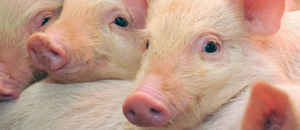
Global1.4 billion people depend directly on livestock for their livelihoods, contributing 40% of agricultural GDP in developing countries (FAO data). Livestock products provide 36% of global protein supply, and animal-source foods are key to preventing childhood stunting in areas of nutritional deficiency.
Ruminants convert plant fibers that humans cannot digest into high-value nutrients. Livestock manure is used as organic fertilizer, reducing theThe use of 150 million tons of chemical fertilizers has formed a crop-livestock cycle system in agricultural countries.
Developed countries have achieved industrialized farming (the feed-to-meat ratio of pigs in the United States has reached2.3:1), accounting for 60% of the world's meat production but using only 30% of feed resources. In sub-Saharan Africa, the traditional free-range model has resulted in livestock productivity of only one-third of the world average.
Animal husbandry contributesChina accounts for 14.5% of global greenhouse gas emissions, of which 39% is methane from intestinal fermentation of cattle. African swine fever caused a 40% drop in China's pig inventory from 2018 to 2021, and foot-and-mouth disease causes economic losses of more than US$5 billion in developing countries each year. The detection rate of drug-resistant bacteria in intensive farms has increased by 300% compared with ten years ago.
The current problems in animal husbandry are mainlyStructural contradictions and challenges,Feed conversion efficiency (global average4:1) and nutritional loss (7kg of grain is consumed to produce 1kg of beef); the conflict between economies of scale and environmental carrying capacity; the game between animal welfare improvement and cost control. The volatility of soybean meal prices reached 58% in 2022. 70% of farmers in developing countries lack cold chain facilities, and the post-harvest loss rate is as high as 25%. The EU has legislated to ban layer cages, while 90% of laying hens in Southeast Asia are still living in an A4-sized space. There is a 10-fold regional difference in consumers' willingness to pay for animal welfare (Northern Europe vs. South Asia).
futureLivestock farmingdevelopIt will be opened from many aspectsnewofDimensions:The precision nutrition revolution,likeLow-methane gene-edited cattle, insect protein alternative50% feed soybeans, intelligent feeding system improves conversion efficiency by 8%etc.; Animal welfare is gradually being recognized,Global Animal CompanionsThe number of GAP-certified farms has increased by 25% annually, and the premium of welfare-labeled products has reached 15-30%. The EU will implement mandatory animal transportation time limits in 2027. From simple freedom from pain to positive welfare: ensuring the expression of natural behaviors (such as pigs' need to explore), providing cognitive stimulation (environmental enrichment for cattle), and establishing a trusting relationship between humans and animals. Cell-cultured meat forms a protein matrix with traditional animal husbandry, and it is expected to replace 35% of ordinary beef consumption in 2035.
existSustainabilityofpathaspect,Innovation of regional adaptation modelUnder development,Nordic promotion"Multifunctional pastures" have tripled the value of biodiversity per unit area; China has promoted "building pig farming", saving 90% of land while achieving precise disease prevention and control; Africa has developed small-scale biogas systems driven by solar energy. We will establish carbon emission accounting standards for animal husbandry (ISO is developing 14082), improve the cross-border animal disease prevention and control network, and promote animal welfare trade rules under the WTO framework.
Livestock farming is undergoing a profound transformation from quantitative expansion to qualitative reconstruction. Under the dual constraints of climate change and food security, it is necessary to build a three-dimensional coordinate system that includes production efficiency, environmental friendliness, and animal welfare. Through technological innovation, institutional design, and cultural reshaping, we can achieve harmonious coexistence with the earth's life while ensuring human development.