
Sustainable development of waterfowl farming
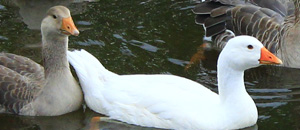
The annual output of waterfowl (ducks and geese) in the world exceeds6 billion ducks, contributing 15% of the world's poultry meat and 30% of the world's egg production. As the largest producer, China accounts for 76% of the world's duck meat production (FAO data in 2022), and its down product exports account for 80% of the global market share, forming an industrial chain worth US$32 billion.
Waterfowl farming isKey components of ecological agricultureInto part,Rice-duck farming system reduces pesticide use in Southeast Asia40%, and rice production increased by 8-15%. European wetland pastures maintain 60% of endangered marsh vegetation through waterfowl farming, and each hectare of wetland carbon fixes 2.3 tons, three times that of forest ecosystems. The foie gras industry in the Landes region of France has created 24,000 jobs, and its unit output value is eight times that of ordinary poultry.
From a global perspective, waterfowl farmingSignificant regional agglomeration characteristics,East Asia- Southeast Asia accounts for 85% of the world's duck farming, Europe dominates foie gras production (95% of the world), and Africa's waterfowl farming has an average annual growth rate of 6.5%, but the industrialization rate is less than 15%. The level of automation is polarized: the Dutch duck farm manages 50,000 ducks per person, while 90% of farmers in Myanmar still use pond free-range farming.
fromProduction efficiencySpeaking of which,The gap in improved seed coverage is40 times: European Cherry Valley ducks can reach 3kg in 42 days (feed-to-meat ratio 1.8:1), while African local ducks need 90 days (feed-to-meat ratio 3.5:1). The annual egg production of laying ducks ranges from 300 eggs for Shaoxing ducks in China to 80 eggs for traditional South Asian breeds.
Disease threats are global,From 2020 to 2023, the highly pathogenic H5N8 avian influenza led to the culling of more than 200 million waterfowl worldwide, causing losses of 1.2 billion euros in Europe. The incidence of duck viral hepatitis in densely farmed areas in Southeast Asia reached 35%, causing losses of 700 million US dollars each year.
Waterfowl farming facesCore contradictions and challengesMainly:Environmental carrying capacity crisis
Intensive breeding areas have excessive nitrogen and phosphorus levels in water bodies, and duck manure discharge leads to eutrophication of ponds.The COD concentration exceeded the standard value by 300 times, threatening the aquatic ecology.
Innovation of ecological integration modelsuperior,ChinaThe three-dimensional "rice-duck-shrimp" breeding system increased the average income by RMB 2,200 per mu;The Netherlands' floating duck farm achieves self-purification of water, with nitrogen and phosphorus recovery rates exceeding75%;Solar-powered waterfowl hatchery in Africa, with hatch rates from58% to 86%。
Waterfowl farming is undergoing a historical transition from quantity-driven to quality-driven reconstruction. Faced with the triple challenges of climate change, resource constraints, and consumption upgrades, it is necessary to build a new industry form that is environmentally friendly, animal welfare-protected, and economically balanced through technological innovation, institutional reconstruction, and global collaboration. This industry, which carries human civilization and natural wisdom, will play a more critical role in sustainable protein supply, ecological services, and cultural heritage.